


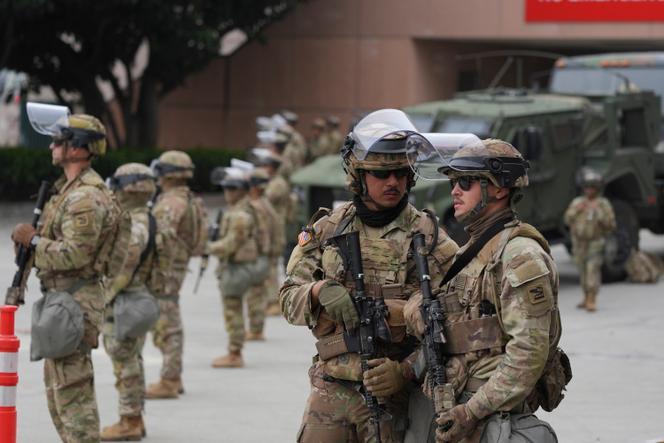
Examining the Legal Complexities of National Guard Deployment in Urban Areas
Understanding the Legal Framework Governing National Guard Use in Cities
The activation of the National Guard within metropolitan areas presents a multifaceted legal challenge,particularly regarding the division of power between federal and state governments. The U.S. Constitution, alongside laws such as the Posse Comitatus Act, restricts the federal military’s role in domestic law enforcement.The operational authority of the National Guard hinges on whether the troops are under state or federal command. When federalized by the President, the Guard operates under federal jurisdiction, which complicates local governance and raises questions about the legality of their actions on city streets. This ambiguity fuels ongoing debates about the appropriate boundaries of military involvement in civil disturbances, especially when federal intervention bypasses state governors’ control.
Opponents of unilateral federal deployment warn that it risks diminishing democratic governance by marginalizing local officials and potentially intensifying unrest. Supporters argue that the federal government has a duty to intervene when local agencies are overwhelmed and public safety is at risk. The legal landscape remains unsettled,with key issues including:
- Command Authority: Differentiating between state-activated and federally activated National Guard units
- Enforcement Boundaries: Restrictions on military personnel engaging in policing activities
- Protection of Civil Rights: Safeguarding constitutional freedoms during deployments
- Interagency Collaboration: Establishing effective cooperation among federal,state,and local entities
| Legal Dimension | Federal Authority | State Authority |
|---|---|---|
| Troop Command | President as Commander-in-Chief | Governor,unless federalized |
| Use of Force Limitations | Strictly regulated by Posse Comitatus | Greater latitude supporting law enforcement |
| Legal Jurisdiction | Federal courts and military oversight | State courts and local regulations |
Constitutional Boundaries on Presidential Deployment of Troops Domestically
Deploying National Guard forces within U.S. cities raises intricate constitutional issues, particularly the balance of power between federal and state governments. Although the President wields significant authority as Commander-in-Chief, this power is circumscribed by constitutional safeguards designed to prevent military overreach and protect individual rights. The Posse Comitatus Act notably restricts the President’s ability to use the military for domestic law enforcement without explicit congressional approval, ensuring that armed forces do not replace civilian police agencies arbitrarily.
The Insurrection Act provides a critical exception, allowing federal intervention when state authorities are unable or unwilling to maintain order. Though, invoking this law requires strict adherence to conditions such as:
- Clear evidence that state officials cannot control the unrest
- A formal presidential declaration justifying federal involvement
- Respect for constitutional protections, including due process and protection against unlawful detention
Failure to meet these criteria exposes federal deployments to legal challenges and accusations of executive overreach. This ongoing tension between state sovereignty and federal authority highlights the constitutional debate over the limits of presidential power in domestic security operations.
Impact on State and Local Authority When the National Guard Is Federalized
Federal activation of the National Guard in cities such as Los Angeles substantially alters the traditional power dynamics between state and local governments. Typically, governors and municipal leaders maintain control over Guard units, enabling tailored responses to local conditions.Federalization, however, can override this control, raising concerns about the erosion of state sovereignty and local decision-making. State officials might potentially be compelled to comply with federal directives that do not necessarily reflect community priorities or established emergency protocols.
Several challenges arise from this shift:
- Command Ambiguity: Confusion over leadership when authority transfers from state to federal hands, complicating crisis management
- Legal Disputes: Questions about the legality and scope of federal intervention without state consent
- Community Perception: Potential public distrust if federal deployments are seen as intrusive or politically motivated
| Stakeholder | Main Concern | Possible Consequences |
|---|---|---|
| State Governors | Loss of control over National Guard units | Delayed or disjointed emergency response |
| Local Mayors | Limited influence on deployment decisions | Community dissatisfaction and protests |
| Federal Authorities | Ensuring national security and order | Heightened legal scrutiny and political backlash |
Proposals for Enhanced Legal Clarity and Oversight
To address the legal uncertainties surrounding National Guard deployments in domestic contexts, it is imperative that legislators craft explicit statutory guidelines clarifying the roles and limitations of federal and state powers. These regulations should specify the exact conditions under which the President may authorize National Guard activation without state approval, balancing the need for swift action with respect for state sovereignty. Clear, transparent criteria for deployment will also enhance accountability and protect civil liberties.
Additionally, establishing strong oversight frameworks is crucial. An independent federal oversight body could be tasked with regularly reviewing the legality and ethical implications of National Guard operations. This entity would help ensure compliance with constitutional standards and prevent misuse of military force.Recommended measures include:
- Mandatory Clarity: Public reporting on the rationale and outcomes of each deployment
- Judicial Oversight: Enabling expedited court reviews of contested activations
- Intergovernmental Cooperation: Enhancing coordination among federal,state,and local agencies
Conclusion: Navigating the Future of National Guard Deployments
The ongoing legal discourse surrounding the National Guard’s deployment to Los Angeles exemplifies the intricate balance between federal authority and local governance. Experts warn that the ramifications extend well beyond this single event, touching on fundamental issues of executive power, civil rights, and the permissible scope of military involvement in domestic affairs. As judicial bodies and policymakers continue to deliberate, the outcomes will likely influence the future framework of national security policies and the evolving relationship between state and federal governments.


