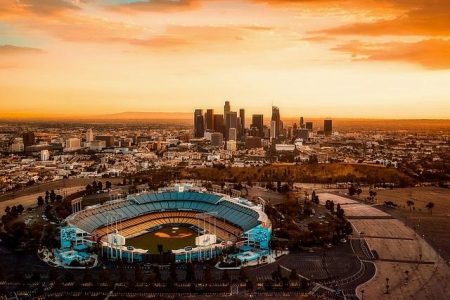
Court Rules Former President’s Use of Active-Duty Troops in Los Angeles Unlawful
A federal judge has determined that the deployment of active-duty military personnel to patrol streets in Los Angeles under the prior administration was not legally authorized, delivering a decisive constraint on executive use of the armed forces in domestic affairs. The Brennan Center for Justice reviewed the litigation, emphasizing how established statutes and constitutional safeguards were applied in the court’s analysis. The decision renews attention to the legal lines that separate national defense from domestic policing, and it underscores broader debates about presidential power and civil liberties.
Why the Ruling Matters: Statutes, Precedent and Constitutional Limits
The court’s opinion turned largely on statutory limits-most notably the Posse Comitatus Act-and the absence of a valid legal basis to convert active-duty troops into de facto law-enforcement agents. The judge found that the administration had not invoked or met the narrow exceptions that would permit such a deployment, including any valid application of the Insurrection Act. In doing so, the ruling reaffirmed that the default rule in U.S. law is a clear separation between military functions and civilian law enforcement unless Congress or statute explicitly provides otherwise.
- Posse Comitatus Act: interpreted to bar the domestic use of active-duty forces for policing without clear statutory authority.
- Insurrection Act: not found to have been properly triggered or applicable in this instance.
- Congressional authorization: the court noted no contemporaneous legislative emergency declaration or clear statutory waiver had been provided.
| Legal Rule | Action Taken | Court Conclusion |
|---|---|---|
| Posse Comitatus Act | Active-duty soldiers assigned to civilian street patrols | Unauthorized; statute bars such use absent clear exception |
| Insurrection Act | Not properly invoked | Insufficient grounds to displace Posse Comitatus protections |
| Congressional Emergency Authority | No contemporaneous emergency resolution | Lack of legislative basis for deployment |
Implications for Federal-State Relations and Executive Power
This decision has practical and doctrinal consequences. Practically, it reinforces state prerogatives over local law enforcement and makes clear that the federal executive cannot unilaterally convert the active-duty armed forces into municipal police. Doctrinally, it strengthens judicial oversight as a check on executive action, signaling to future administrations that robust legal justification and, where required, legislative authorization are prerequisites to domestic military deployments.
Key Takeaways for Federal and State Actors
- Federal deployments of active-duty troops in civilian settings are presumptively impermissible without a statutory basis.
- State officials retain primary authority over the deployment of the National Guard for public safety under state law.
- Judicial review remains a viable and enforceable remedy where constitutional or statutory limits are allegedly breached.
| Area | Presidential Reach | State Role |
|---|---|---|
| Authorization | Requires statutory justification or narrow exceptions | Manages National Guard activation and local policing |
| Operational Control | Limited when troops operate domestically | Direct command over state forces for public safety missions |
| Oversight | Subject to judicial scrutiny and congressional oversight | Local accountability and legal constraints apply |
Civil Liberties Concerns Raised by Military Presence at Protests
Beyond statutory questions, the court’s opinion addressed significant civil-rights implications from stationing soldiers in urban protest environments. When uniformed military personnel engage with civilians during demonstrations, it raises real risks to First- and Fourth-Amendment freedoms-speech, assembly, and protections from unreasonable searches and seizures can be chilled or compromised.
Lawyers and civil-rights advocates warned that such deployments can lead to:
- Arrests or detentions without clear probable cause or proper procedural safeguards.
- Heightened potential for excessive force when soldiers trained for combat confront civilian crowds.
- A chilling effect on political expression as citizens fear militarized responses to protest activity.
| Concern | Potential Impact | Relevant Law |
|---|---|---|
| Military Force in Civic Spaces | Risks to personal safety and civil liberties | Posse Comitatus Act; Constitution |
| Mass Detentions | Due process and Fourth Amendment issues | Fourth Amendment protections |
| Suppression of Speech | Reduced willingness to engage in protests | First Amendment rights |
Comparative Examples and Context
Historically, U.S. responses to civil unrest have relied primarily on state governors activating the National Guard and local law enforcement-arrangements that preserve civilian control and accountability. When federal troops are placed in domestic roles without clear legal cover, courts have often been asked to delineate the boundary lines. The recent ruling in the Los Angeles matter fits into a broader pattern of judicial insistence on statutory clarity before the armed forces may be used on U.S. soil for law enforcement purposes.
For instance, in past urban disturbances, authorities typically leaned on state-level resources and mutual aid compacts among police agencies rather than deploying active-duty units. Those practices reflect a long-standing policy preference to keep military forces distinct from routine civilian policing.
Recommended Reforms to Prevent Future Unauthorized Deployments
To reduce the risk of future constitutional conflicts and to better protect civil liberties, policymakers should consider targeted legislative and procedural reforms. The goal: make legal requirements for domestic military use clearer, enhance transparency, and speed judicial review when deployment decisions are contested.
Practical Policy Options
- Statutory clarification: Amend relevant statutes to define precisely when and how active-duty forces may be used domestically, with narrow, enumerated exceptions.
- Mandatory congressional notice and review: Require rapid, public reporting to Congress when troops are dispatched for domestic operations, along with prompt legislative review or time-limited authorizations.
- Fast-track judicial review: Create procedures that allow courts to adjudicate claims about domestic deployments on an expedited schedule so legality can be assessed in near real time.
- Transparency and accountability measures: Require operational reporting, independent after-action reviews, and public disclosure of rules of engagement when forces are used domestically.
| Reform | Purpose | Anticipated Benefit |
|---|---|---|
| Statutory Definitions | Clarify when military use is lawful | Reduces executive ambiguity and legal disputes |
| Congressional Oversight | Timely legislative review of deployments | Ensures democratic checks on emergency measures |
| Judicial Expediency | Enable quick court interventions | Protects rights and provides legal certainty |
Looking Ahead
By finding the Los Angeles deployment unlawful, the court has signaled that constitutional and statutory protections remain potent limits on executive power. Policymakers, civil-rights organizations, and civic leaders will be watching how this decision affects future incidents in which federal resources are considered for use in American cities. Ensuring a transparent, legally grounded framework for any future domestic military involvement will be essential to preserve civil liberties while enabling effective responses to genuine emergencies.
Keywords: Posse Comitatus Act, Insurrection Act, Donald Trump, Los Angeles, military deployment, civil liberties