
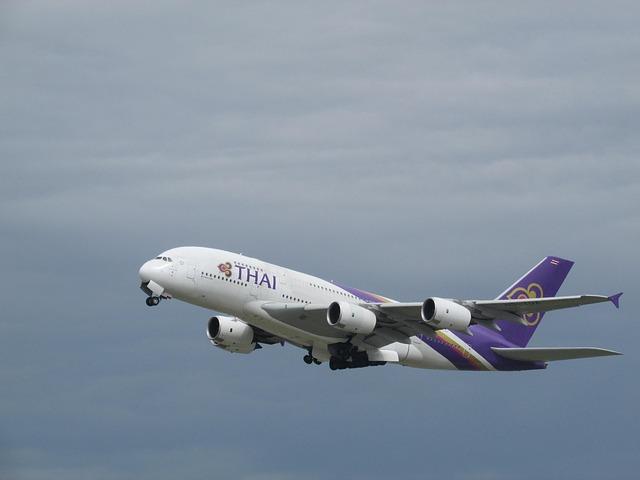
British Airways Drops the A380 from Los Angeles: A Strategic Pivot
British Airways has confirmed it will remove the Airbus A380 from its Los Angeles route, a notable change in its long-haul network. This decision reflects shifting airline economics, environmental considerations, and an industry-wide move toward more versatile, fuel-efficient twin-engine aircraft. For travelers who have grown accustomed to the superjumbo on transatlantic services, the change will alter capacity dynamics, scheduling options, and the onboard experience.
Why the A380 Exit Makes Strategic Sense
- Operational flexibility: Modern twinjets such as the Boeing 787 and Airbus A350 allow carriers to match capacity more precisely to demand. Replacing a single high-capacity A380 with one or more long-range twin-engine aircraft gives British Airways the ability to increase flight frequencies or right-size seats during off-peak periods.
- Fuel and emissions: New-generation widebodies typically deliver substantially lower fuel burn per seat than four-engine designs. Industry estimates put the efficiency gains of the 787/A350 family at up to roughly 20–25% per seat versus older four-engine aircraft, improving route economics and carbon intensity.
- Fleet modernization: Airlines worldwide are concentrating investment on newer platforms with advanced avionics, quieter engines, and cabins designed for improved passenger comfort and connectivity.
What Passengers Can Expect
- Different cabins, similar service: While the A380’s sheer scale and distinct upper-deck lounge are iconic, passengers will generally experience cabins with more modern environmental controls, improved humidity and pressure on the 787, and the A350’s quieter interior. In many cases, in-flight entertainment systems and Wi-Fi offerings will be on par or better than what was aboard the A380.
- Greater scheduling options: Because two 787s can collectively carry roughly the same number of passengers as one A380, British Airways may offer increased daily frequencies, giving travelers more choice in departure times and potentially fewer full flights.
- Changes in seat availability: The A380’s very high single-leg capacity will be reduced per-aircraft, which could alter availability for premium cabins on specific flights—though airlines often offset this by reconfiguring fleets and deploying additional services.
Airport and Operational Consequences at LAX
- Easier gate logistics: The A380 requires specialized ground handling and larger gate footprints—often two jet bridges—so its removal will free gates and simplify turnaround operations at Los Angeles International Airport (LAX).
- Ground handling speed: Handling a fleet dominated by twinjets can speed up boarding and disembarkation cycles and reduce the need for bespoke ramp equipment, improving on-time performance and resilience during irregular operations.
- Slot and terminal implications: Freed-up space and gates may allow BA or other carriers to introduce new frequencies or services, potentially benefiting passenger choice at LAX.
Practical Alternatives for Travelers
- Direct on different equipment: British Airways will continue serving the London–Los Angeles market using modern long-range jets such as the 787 Dreamliner and A350, offering direct options without changing carriers.
- Connecting itineraries: Travelers preferring an A380 experience can still find superjumbo services on other airlines or on alternate transatlantic routes that historically operated the type; connecting via other U.S. gateways or via London hubs remains an option.
- Frequency vs. capacity trade-off: If you value more departure options, look for routes served by multiple daily flights on smaller widebodies. If you want a single nonstop with maximum seat supply, check schedules carefully during peak travel periods.
Capacity and Range Snapshot (typical figures)
- Airbus A380: ~550 passengers (typical high-density layouts), range approx. 8,000–8,200 miles
- Boeing 787-9: ~290–310 passengers, range approx. 7,500–7,700 miles
- Airbus A350-1000: ~330–350 passengers, range approx. 8,500–8,700 miles
A simple comparison: two 787-9s operating the same route can collectively carry more passengers than a single A380 while offering more departure times, illustrating why carriers favor twin-engine fleets for flexibility.
Broader Industry Context and Recent Trends
- Production and fleet shifts: Airbus ended commercial production of the A380 in 2021, and many operators either retired or redeployed their superjumbos after the pandemic as travel patterns evolved. Meanwhile, carriers such as Emirates retained large A380 fleets longer than most, but the global trend favors fuel-efficient twins.
- Environmental and economic drivers: Rising fuel prices, tighter environmental targets, and evolving demand for point-to-point services have pushed airlines to adopt aircraft that balance range with lower operating costs and emissions intensity.
What This Means for British Airways’ Network
Removing the A380 from the Los Angeles rotation fits into a broader strategy to operate more flexible, fuel-efficient fleets that can be deployed across a variety of markets. Expect British Airways to lean on its fleet of Boeing 787s and Airbus A350s to preserve service quality on transatlantic routes while optimizing frequency and yield. Travelers should monitor schedules in the coming months for shifts in timings, aircraft type, and cabin configurations.
Bottom Line
The withdrawal of the A380 from British Airways’ Los Angeles route signals a practical response to economic, environmental, and operational realities. While the superjumbo’s grandeur will be missed by some, the transition to modern twin-engine widebodies promises improved efficiency, potentially more flight choices, and cabins designed for today’s connectivity and comfort expectations. For those seeking the A380 experience specifically, alternative carriers and routes may still offer opportunities, but the industry’s trajectory is clear: flexibility and efficiency now dominate long-haul fleet planning.