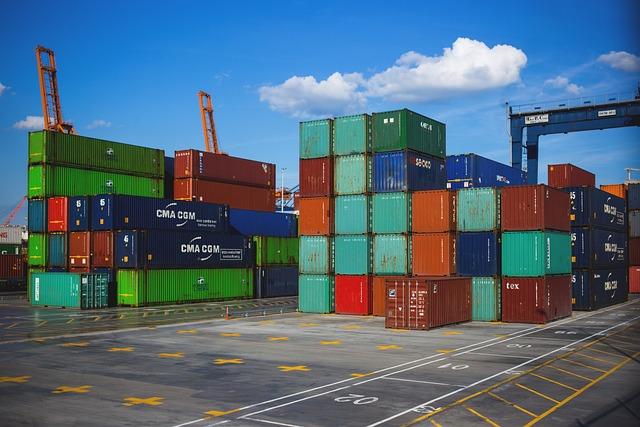
January Dip in US Container Imports Indicates Return to More Typical Trade Flows
US container imports fell 6.8% in January, according to statistics from Descartes Systems Group reported by Reuters. Far from signaling an immediate economic collapse, logistics experts interpret this pullback as a correction after an extended period of unusually high cargo volumes. The decline points to easing congestion, steadier ordering patterns, and a gradual rebalancing of global supply chains following pandemic-era disruptions.
Snapshot: Recent Monthly Volumes and Movement
After several months of elevated inbound shipments tied to holiday replenishment and pandemic-era stockpiling, January’s drop represents a meaningful moderation in activity. The following table summarizes the latest available monthly counts in twenty-foot equivalent units (TEUs) and percentage changes:
| Month | Container Imports (TEUs) | Month-over-Month Change |
|---|---|---|
| November 2023 | 2,100,000 | +1.2% |
| December 2023 | 2,180,000 | +3.8% |
| January 2024 | 2,034,000 | -6.8% |
Viewed against the backdrop of the prior surge, this correction is consistent with a market shifting from emergency replenishment back to steadier ordering cycles.
What Descartes Systems Group Identifies as the Drivers
Descartes Systems Group interprets the January contraction not as proof of weakening fundamentals but as normalization after a period of strained logistics. Their analysis highlights several underlying causes that have combined to lower inbound container counts:
- Inventory rebalancing: Retailers and distributors are reducing excess safety stock accumulated during recent uncertainty.
- Operational recovery: Improved berth productivity and fewer port delays mean that shippers no longer need to over-order to avoid stockouts.
- Sourcing adjustments: Firms continuing to diversify suppliers and move more freight regionally have altered long-haul container flows.
Descartes frames the decline as a seasonal and structural correction—the market returning from a peak rather than entering a sustained slump.
Practical Effects on Ports, Carriers and Shippers
A steadier rhythm of imports changes how every link in the logistics chain operates. The immediate outcomes include:
- Lower terminal congestion and faster vessel turnaround times.
- More predictable drayage and inland transportation scheduling.
- Opportunities to reduce emergency airfreight spend and reliance on expedited lanes.
Illustrative Example
Consider a national retailer that previously inflated orders to buffer uncertain lead times. With more reliable port throughput and normalized import volumes, that retailer can cut excess inventory, freeing warehouse space and reducing carrying costs—similar to trimming sails after a storm to sail more efficiently.
How Businesses Should Respond
The shift toward normalized import levels calls for tactical adjustments. Supply chain leaders should prioritize flexibility, visibility and cost discipline to operate effectively in this new phase.
- Refine forecasting: Use rolling forecasts and scenario planning to align procurement with more predictable demand.
- Increase visibility: Deploy real-time tracking and analytics so teams can respond faster to deviations.
- Diversify thoughtfully: Maintain a mix of local, regional and global suppliers to balance cost and resilience rather than over-concentrating risk.
- Adjust capacity: Reassess warehousing footprints and transportation contracts to match lower, steadier throughput.
| Area | Action | Expected Benefit |
|---|---|---|
| Inventory Management | Shift to dynamic safety-stock policies | Lower carrying costs, fewer stock distortions |
| Transport Planning | Optimize modes and consolidate lanes | Reduced freight spend, improved service |
| Supplier Strategy | Blend nearshore and offshore sourcing | Balanced lead times and risk exposure |
Broader Trade Implications and Near-Term Outlook
While a one-month decline does not define a macroeconomic trend, the pivot toward normalized US container imports suggests a calmer near-term environment for global trade. Market participants should expect fewer of the acute bottlenecks that characterized the pandemic years, but remain vigilant for episodic disruptions from weather events, labor actions, or geopolitical shifts.
Analysts will continue to track monthly throughput and inventory indicators to determine whether this moderation persists into subsequent quarters. For now, the prevailing view—echoed by Descartes Systems Group—is that the January falloff reflects a market finding its footing rather than the start of a prolonged downturn.
Closing Thoughts
The reported 6.8% retreat in US container imports for January marks a measurable step toward normalized trade flows. Companies that use this period to tighten forecasting, improve visibility and recalibrate sourcing will be better positioned to capture efficiencies and reduce risk as global logistics continue evolving.