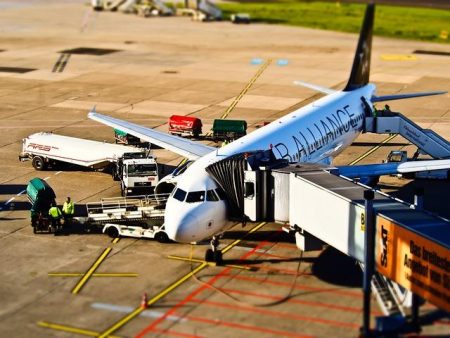
Widespread Flight Interruptions Disrupt Major U.S. Airports Today
Travelers reported major disruptions across several of the nation’s busiest airports today as a surge of delays and cancellations hit key hubs including Atlanta, San Francisco, Los Angeles, Denver, Seattle and Dallas. Industry trackers logged roughly 2,145 delayed flights and about 108 cancellations, touching schedules across legacy and regional carriers such as American Airlines, United Airlines, Endeavor Air and SkyWest Airlines. The spike has produced cascading effects for passengers and airlines as operations teams race to restore normal flow.
Which Airports Felt the Brunt?
Congestion was concentrated at several gateway airports, where terminal crowding and gate shortages compounded airborne and ground delays. Below is a snapshot of the most affected hubs and their reported disruption counts:
| Airport / Code | Reported Delays | Reported Cancellations | Major Airlines Serving |
|---|---|---|---|
| Hartsfield–Jackson Atlanta (ATL) | ~650 | ~40 | Delta, American |
| San Francisco (SFO) | ~390 | ~20 | United, Alaska |
| Los Angeles (LAX) | ~320 | ~15 | American, Delta |
| Denver (DEN) | ~280 | ~10 | United, Southwest |
| Seattle (SEA) | ~270 | ~12 | Alaska, Delta |
| Dallas/Fort Worth (DFW) | ~235 | ~11 | American |
Airlines and Regional Carriers: Who’s Most Affected?
Both large network carriers and their regional partners reported heavy impacts as aircraft and crews were displaced across connecting flights. The following breakdown highlights carriers that recorded the highest numbers of delayed or canceled services:
| Airline | Approx. Delays | Approx. Cancellations |
|---|---|---|
| American Airlines | ~750 | ~40 |
| United Airlines | ~680 | ~35 |
| Endeavor Air (regional) | ~350 | ~15 |
| SkyWest Airlines (regional) | ~300 | ~18 |
What’s Causing the Disruption?
Multiple factors are converging to create today’s operational strain. Airlines and airport operators point to:
- Workforce shortages: staffing gaps among pilots, flight attendants and ground crews limit flexibility when crews miss assignments or flights are rerouted.
- Weather across several regions: storms and adverse conditions have forced reroutes, airport closures and flow restrictions in some airspace.
- Air traffic management constraints: capacity limits and flow controls issued by regional centers create bottlenecks that ripple through the national network.
- Equipment and scheduling knock-on effects: when a delayed aircraft or crew misses a connection, subsequent flights inherit the delay in a domino-like pattern.
Think of the system like a busy commuter rail network: a single stalled train during rush hour quickly creates delays on feeder lines, lengthening travel times for passengers who never saw the initial issue.
How Passengers Can Reduce Friction
With flights in flux, proactive steps can significantly reduce stress and financial losses. Practical measures include:
- Verify flight status immediately before departure: use airline apps, airport notifications and text alerts for real-time updates.
- Allow extra time for connections: if your itinerary includes a short layover at ATL, SFO, LAX, DEN, SEA or DFW, consider rebooking to add buffer time.
- Contact airlines early: if your flight is delayed or canceled, calling or using an airline’s web rebooking tool as soon as a change is announced increases your chances of securing an earlier alternative.
- Use alliance partners and open jaws: searching for routes operated by partner carriers or flying into nearby airports can yield faster alternatives.
- Know your rights and coverage: check travel insurance policies and airline compensation rules—some carriers offer meal vouchers, hotel stays or refunds depending on circumstances.
- Arrive at customer service or gate desks early: in-person engagement can sometimes expedite re-accommodation.
Industry Response and Recovery Outlook
Airlines and airport authorities are deploying contingency plans—adding standby crews where possible, rearranging aircraft rotations and leaning on partner airlines—to limit the damage. Technology teams are also prioritizing schedule re-optimization tools to minimize further knock-on effects.
Experts describe the situation as a network-level strain rather than a single-point failure. While short-term relief (reducing the worst of the delays) can come within days as staffing and routing decisions take effect, full normalization across interconnected hubs typically unfolds over several weeks to months depending on weather patterns and crew availability. Industry leaders say sustained investments in crew recruiting, improvements to air traffic control systems and infrastructure upgrades will be necessary to bolster resilience long term.
Example Scenario: How a Delay Multiplies
Imagine an aircraft scheduled to operate from Seattle to Atlanta, then onward to Dallas. If the Seattle leg is delayed two hours due to weather, the crew may exceed duty-time limits by the time it reaches Atlanta. That single disruption can force a cancellation or delayed departure for the Dallas segment and potentially affect the aircraft’s next scheduled rotations the following day—illustrating how localized issues can propagate through a carrier’s route map.
Final Notes for Travelers
As disruptions continue at major hubs—ATL, SFO, LAX, DEN, SEA and DFW—passengers should remain vigilant: check flight statuses frequently, prepare contingency plans and keep documentation (boarding passes, receipts, insurance details) accessible. Although airlines are working to mitigate the backlog, flexibility and early action remain the best tools for navigating today’s travel challenges.