



Frank Gehry, Architect Who Transformed Cityscapes, Dies at 96
Frank Gehry, the trailblazing architect whose sculptural buildings reshaped Los Angeles and influenced urban design around the world, has passed away at 96. Celebrated for defying orthodoxy through bold silhouettes and inventive materials, Gehry produced a body of work—most famously the Walt Disney Concert Hall—that altered how cities present themselves culturally and economically. His death closes a chapter in contemporary architecture defined by risk-taking, technological innovation, and a relentless drive to make buildings behave like art.
From Sketch to Skyline: A Six-Decade Transformation
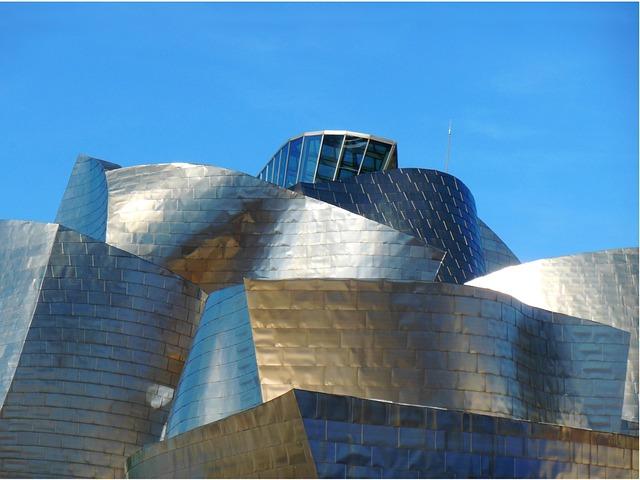
Gehry’s career spanned more than sixty years, during which he moved from experimental forms to internationally recognized landmarks. Early projects hinted at a deconstructive impulse, but it was his later, large-scale commissions that captured global attention—structures that read less like boxes and more like motion frozen in metal and concrete. In Los Angeles, his designs helped recast underused districts into cultural destinations; elsewhere, works such as the Guggenheim Museum Bilbao and Fondation Louis Vuitton became shorthand for the power of iconic architecture to drive civic renewal.
Notable Works: A Rapid Reference
- Walt Disney Concert Hall — Downtown Los Angeles (2003)
- Binoculars Building (Chiat/Day Building) — Venice, California (1991)
- Guggenheim Museum Bilbao — Bilbao, Spain (1997)
- Fondation Louis Vuitton — Paris, France (2014)
- 8 Spruce Street / New York by Gehry — New York City (2011)
- Lou Ruvo Center for Brain Health — Las Vegas (2010)
- Dwight D. Eisenhower Memorial — Washington, D.C. (completed 2020s)
The Design Language: Materials, Motion, and Machines
Gehry’s signature was a willingness to treat buildings like sculptures—surfaces that curve, ripple, and catch light in unpredictable ways. He frequently employed metallic cladding and reflective finishes to generate shifting visual effects as daylight moved across façades. Equally important was his embrace of technology: Gehry was an early adopter of advanced computer-aided tools (notably CATIA adapted from aerospace) to translate radical geometry into buildable components. That marriage of artistry and engineering enabled forms that would have been nearly impossible under traditional drafting methods.
How Gehry Changed Practice
- Normalized the use of digital fabrication and parametric processes in mainstream architecture.
- Encouraged interdisciplinary teams—artists, engineers, fabricators—to collaborate from concept through construction.
- Expanded what clients and cities expect from cultural buildings: that they generate identity as well as function.
Architectural Landmarks as Urban Catalysts
Gehry’s projects often performed like social and economic magnets. A striking building can increase foot traffic, spur new hospitality and retail investments, and raise a neighborhood’s profile—effects popularly called the “Gehry effect,” akin to the better-known “Bilbao effect.” In Los Angeles, the Walt Disney Concert Hall helped anchor downtown’s cultural district and attract visitors, performances, and related businesses. Across cities, his work demonstrated how daring design can become a tool of urban strategy when paired with programming and public engagement.
Urban Outcomes to Consider
- Economic stimulation through increased tourism and event-driven spending.
- Strengthened civic identity as cities adopt signature buildings as symbols.
- Potential for neighborhood revitalization—and sometimes displacement—requiring proactive planning to ensure equitable benefits.
Innovation, Critique, and the Costs of Spectacle
Gehry’s work provoked admiration and controversy in equal measure. Admirers praised the emotive power and audacity of his creations; detractors questioned cost, maintainability, and how well such buildings served everyday users. Complex geometries and custom-fabricated components can increase construction and upkeep expenses, and some projects required later adjustments to address unforeseen practical issues. These trade-offs sparked broader conversations about balancing artistic ambition with durability, sustainability, and social responsibility.
Key Tensions Throughout His Career
- Artistic experimentation vs. long-term operational practicality.
- Attraction of investment vs. risks of gentrification and uneven distribution of benefits.
- Technological possibility vs. budgetary constraints.
Preserving an Unconventional Legacy
With Gehry’s passing, architects, preservationists, and city officials face the task of caring for buildings that were never conventional to begin with. Conserving his oeuvre involves specialized strategies: 3D documentation and laser scanning to capture complex geometries, tailored maintenance protocols for nonstandard materials, and adaptive management plans that account for environmental exposure and aging fabrication techniques. Legal protections—historic designations or conservation easements—may be appropriate for especially significant works, while educational programs can pass his methods and values to new generations.
Practical Preservation Measures Being Employed
- Digital archiving of original models, BIM files, and fabrication records to inform repairs and retrofits.
- Preventative maintenance programs focused on metal cladding, seals, and support systems.
- Partnerships between public agencies, private owners, and cultural institutions to fund long-term stewardship.
- Retrofits that improve energy performance while respecting original aesthetics, such as discreet insulation upgrades and glazing improvements.
Looking Ahead: Influence Beyond Buildings
Frank Gehry’s influence will persist in classrooms, studios, and city halls. His career helped normalize the idea that architecture can be both art and infrastructure, that a single bold project can catalyze broader urban change. Young designers continue to study his use of form, material, and digital tools, applying those lessons to sustainable design, affordable housing experiments, and community-focused projects. As municipalities increasingly weigh cultural investment against social equity, Gehry’s work provides both inspiration and a reminder of the responsibilities that accompany architectural spectacle.
Summary
Frank Gehry leaves behind an unmistakable imprint on Los Angeles and the wider architectural world: daring forms, new construction techniques, and a reshaped conversation about the role of landmark buildings in city life. His legacy is both aesthetic and operational—an archive of ideas that will challenge, enchant, and provoke debate for years to come. As cities and caretakers chart how to preserve and learn from his work, Gehry’s buildings will continue to spark imagination and inform the future of architecture.




