


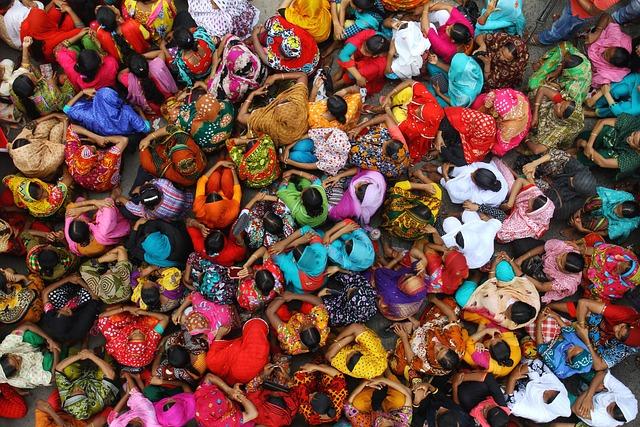
Downtown Los Angeles Witnesses Massive Demonstrations in Response to Immigration Raids
Over a span of three consecutive days, downtown Los Angeles transformed into a focal point of large-scale protests triggered by recent immigration enforcement operations. Thousands of residents and activists converged to voice their dissent, demanding important reforms to immigration policies.This article delves into the unfolding of these events, spotlighting pivotal moments, community responses, and the broader implications for immigration discourse in the region.
Mass Mobilization in Downtown Los Angeles: A Community’s Outcry Against Immigration Raids
During this intense three-day period, an estimated 12,500 individuals gathered in downtown Los Angeles, uniting across diverse backgrounds to protest the aggressive immigration raids that had recently taken place.The demonstrations featured a blend of peaceful marches, heartfelt vigils, and moments of heightened tension with law enforcement officials. Protesters carried banners, chanted calls for justice, and marched along key city arteries, illustrating a powerful display of solidarity.
Noteworthy highlights from the protests included:
- Evening vigils commemorating families fractured by deportations, fostering a somber atmosphere of remembrance.
- Community leaders delivering impassioned speeches urging immediate legislative action to protect immigrant rights.
- Deployment of mobile legal aid stations offering on-the-spot assistance and guidance to those impacted by enforcement activities.
| Day | Approximate Attendance | Main Activity |
|---|---|---|
| Day 1 | 3,200+ | March from City Hall to Pershing Square |
| Day 2 | 5,800+ | Open Mic and Community Forums |
| Day 3 | 3,500+ | Legal Aid Clinics and Healing Circles |
Calls for Comprehensive Policy Changes and Enhanced Immigrant Protections
In the wake of the protests, influential community figures and activists have coalesced around a unified demand for transformative immigration policy reforms. They advocate for stronger safeguards for undocumented individuals, transparent communication from enforcement agencies, and an end to harsh immigration tactics that disrupt family units and community cohesion. These leaders stress the urgency of legislative action at both the state and federal levels to prioritize human dignity over punitive enforcement.
Key reform proposals emphasized by advocates include:
- Adoption of sanctuary city ordinances that restrict collaboration between local law enforcement and federal immigration authorities.
- Establishment of publicly funded legal assistance programs to support those impacted by immigration raids.
- Enhanced oversight mechanisms to ensure accountability and transparency in immigration enforcement operations.
- Broadened access to essential social services for immigrant families, nonetheless of their legal status.
| Policy Initiative | Anticipated Benefits |
|---|---|
| Sanctuary City Policies | Reduced fear of deportation, fostering safer neighborhoods |
| Legal Aid Funding | Stronger legal defense for detained immigrants |
| Enforcement Accountability | Greater transparency and reduced abuses during raids |
| Expanded Social Services | Improved family stability and community well-being |
Law Enforcement’s Strategy Amid Heightened Public Demonstrations
In reaction to the surge of protests following the immigration raids, law enforcement agencies in Los Angeles implemented a series of measures aimed at preserving public order while respecting the right to peaceful assembly. Police and federal agents coordinated closely, deploying tactical units and increasing patrols in key protest areas to deter violence and protect infrastructure.
Notable law enforcement actions included:
- Augmented patrol presence: Additional officers were stationed throughout protest zones to enable swift responses.
- Selective deployment of non-lethal methods: Tools such as tear gas and rubber bullets were used sparingly during moments of unrest to maintain control.
- Engagement with protest organizers: Authorities established dialog channels to facilitate peaceful demonstrations and negotiate terms.
| Date | Law Enforcement Measures | Result |
|---|---|---|
| Day 1 | Barricades and increased officer deployment | Managed crowd effectively with minimal incidents |
| Day 2 | Targeted use of non-lethal crowd control | Contained tensions, preventing escalation |
| Day 3 | Dialogue sessions with protest leaders | Facilitated peaceful dispersal and de-escalation |
Advocates Push for Integrated Approaches to Mitigate Immigration Enforcement Impacts
Immigrant rights advocates and community organizers are urging policymakers to embrace multifaceted solutions that address the complex consequences of immigration enforcement beyond immediate legal actions. They argue that raids alone fail to tackle systemic issues such as economic vulnerability, fear within immigrant populations, and limited access to legal and social resources.
Essential components of a sustainable response include:
- Accessible legal support services to provide timely assistance to those detained or threatened with deportation.
- Community engagement programs designed to build trust between immigrant residents and local authorities.
- Economic empowerment initiatives aimed at enhancing job security, healthcare access, and overall well-being for immigrant families.
- Policy reforms that create clear pathways to citizenship and safeguard workers’ rights.
| Proposed Initiative | Projected Outcome |
|---|---|
| Community Legal Clinics | Lower detention rates through prompt legal defense |
| Economic Security Programs | Strengthen family stability and reduce poverty levels |
| Trust-Building Efforts | Enhance communication and alleviate fear of law enforcement |
| Pathways to Citizenship Reform | Provide long-term security and promote integration |
Conclusion: Navigating the Aftermath and Future of Immigration Enforcement in Los Angeles
As the fervor of the three-day protests in downtown Los Angeles subsides, the city faces ongoing challenges in addressing the ramifications of recent immigration raids. The demonstrations have illuminated profound concerns regarding immigration policy and its effects on local immigrant communities.While immediate tensions have eased, the dialogue initiated by these events is poised to shape future discussions on immigration reform and public safety strategies in Los Angeles. City officials have committed to maintaining open communication with community representatives as they work toward equitable solutions.




