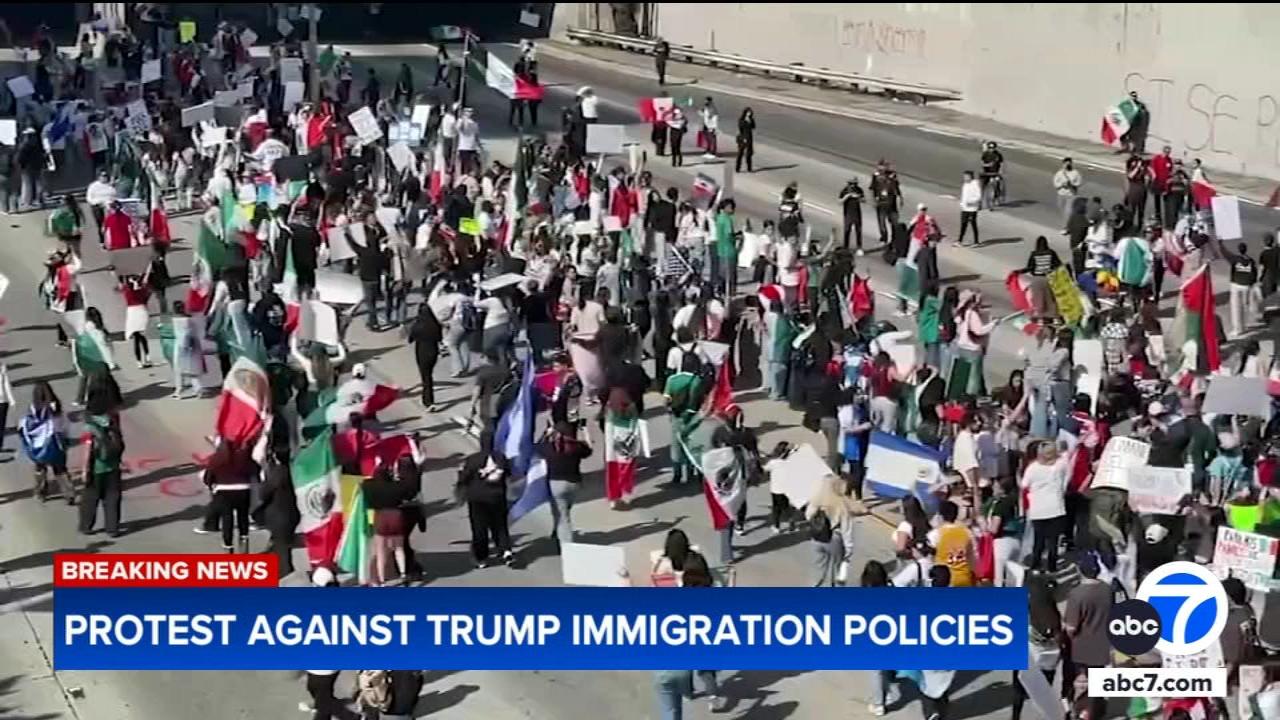
Escalating Anti-ICE Demonstrations in Los Angeles Amid National Guard Deployment
Los Angeles has experienced four straight nights of vigorous protests opposing Immigration and Customs Enforcement (ICE) activities, signaling rising tensions over recent immigration crackdowns. The city’s response has included mobilizing the National Guard to assist local police forces, underscoring the widening rift between immigrant rights advocates and federal enforcement agencies. As these events unfold, both residents and officials remain vigilant about the implications for community safety and social cohesion.
- Protest hotspots: Central Los Angeles,vicinity of ICE detention centers,and key urban crossroads
- Demands from protesters: Halt deportations,immediate release of detainees,and cessation of ICE operations within California
- Authorities’ measures: Heightened police and National Guard presence,deployment of crowd management tactics,and establishment of temporary vehicle checkpoints
| Day | Estimated Protester Numbers | Law Enforcement Response |
|---|---|---|
| Night 1 | Approximately 500 | Issued verbal cautions |
| Night 2 | About 1,200 | Several arrests recorded |
| Night 3 | Close to 2,000 | National Guard officially deployed |
| Night 4 | Over 2,500 | Expanded crowd control and road closures |
Calls for Transparency and Responsibility from Community Leaders
Leaders from various sectors in Los Angeles—including grassroots organizers,religious figures,and civil rights defenders—have united in demanding greater accountability and openness regarding immigration enforcement tactics that have ignited widespread protests. They stress the necessity for extensive oversight and clear dialog from authorities explaining recent raids and the justification for National Guard involvement. Many argue that aggressive enforcement strategies exacerbate fear among immigrant populations and erode trust between communities and law enforcement.
Highlighted priorities voiced during community meetings and public declarations include:
- Autonomous inquiries into allegations of misconduct during immigration operations.
- Adoption of community-centered policies that safeguard residents’ rights and dignity.
- Consistent briefings from officials to maintain transparency and public confidence.
- Comprehensive support for families affected by detention and separation.
| Group | Main Concern | Requested Measures |
|---|---|---|
| Religious Organizations | Family separations and trauma | Assurances of humane treatment |
| Civil Rights Groups | Due process and legal rights violations | Transparent and impartial investigations |
| Immigrant Advocacy Networks | Fear of deportation and community disruption | Policies that protect immigrant communities |
National Guard Deployment: Implications for Public Safety and Civil Liberties
The introduction of the National Guard alongside local law enforcement in response to the ongoing anti-ICE protests has sparked a complex debate about balancing public safety with the preservation of civil liberties. Officials assert that the military presence is intended to deter violence and property damage. However,critics warn that such a show of force may heighten tensions and infringe upon constitutional rights,including freedom of speech and peaceful assembly. The sight of armed Guardsmen prepared for riot control can intimidate demonstrators, potentially suppressing lawful dissent.
Community advocates and civil rights organizations have voiced apprehensions about possible overreach and the long-term damage to trust between citizens and law enforcement. The distinction between maintaining order and violating individual freedoms is increasingly blurred, prompting demands for explicit operational guidelines and accountability mechanisms. Key concerns related to the National Guard’s role include:
- Potential for escalation: Militarized tactics might provoke confrontations rather than prevent them.
- Chilling effect on expression: Armed presence could deter peaceful protests and civic engagement.
- Need for oversight: Transparent policies governing the scope and limits of deployment are essential.
- Community relations: Risk of eroding public trust in government and law enforcement institutions.
Strategies for Harmonizing Security and Human Rights in Immigration Enforcement
Addressing the complex intersection of national security and individual rights requires a nuanced, multi-dimensional strategy centered on transparency and community involvement. Engaging directly with affected populations through open dialogues fosters trust and provides valuable perspectives that can shape humane yet effective immigration policies. Furthermore, law enforcement agencies must operate under stringent oversight to prevent abuses and racial profiling.
Investing in advanced training and technology is also critical.Immigration officers should receive continuous education on human rights principles and cultural competence, complemented by tools that improve identification accuracy while respecting privacy.The table below outlines essential policy components that balance security imperatives with humanitarian protections:
| Policy Component | Security Advantage | Human Rights Protection |
|---|---|---|
| Transparent Reporting | Builds public confidence | Ensures accountability for rights violations |
| Independent Oversight Bodies | Minimizes misconduct risks | Safeguards against unlawful detentions |
| Community Liaison Initiatives | Improves threat identification | Amplifies immigrant community voices |
| Rights-Based Training Programs | Enhances enforcement effectiveness | Promotes respect for cultural diversity |
Final Thoughts on Los Angeles Immigration Protests and Future Outlook
As Los Angeles continues to navigate the challenges posed by ongoing protests against ICE enforcement, the city stands at the crossroads of a broader national conversation on immigration policy and civil rights. The deployment of the National Guard and the responses from local authorities highlight the delicate balance between security and liberty.Stakeholders across the spectrum await further developments, emphasizing the need for solutions that uphold justice, safety, and human dignity. Stay tuned for updates as this evolving situation progresses.