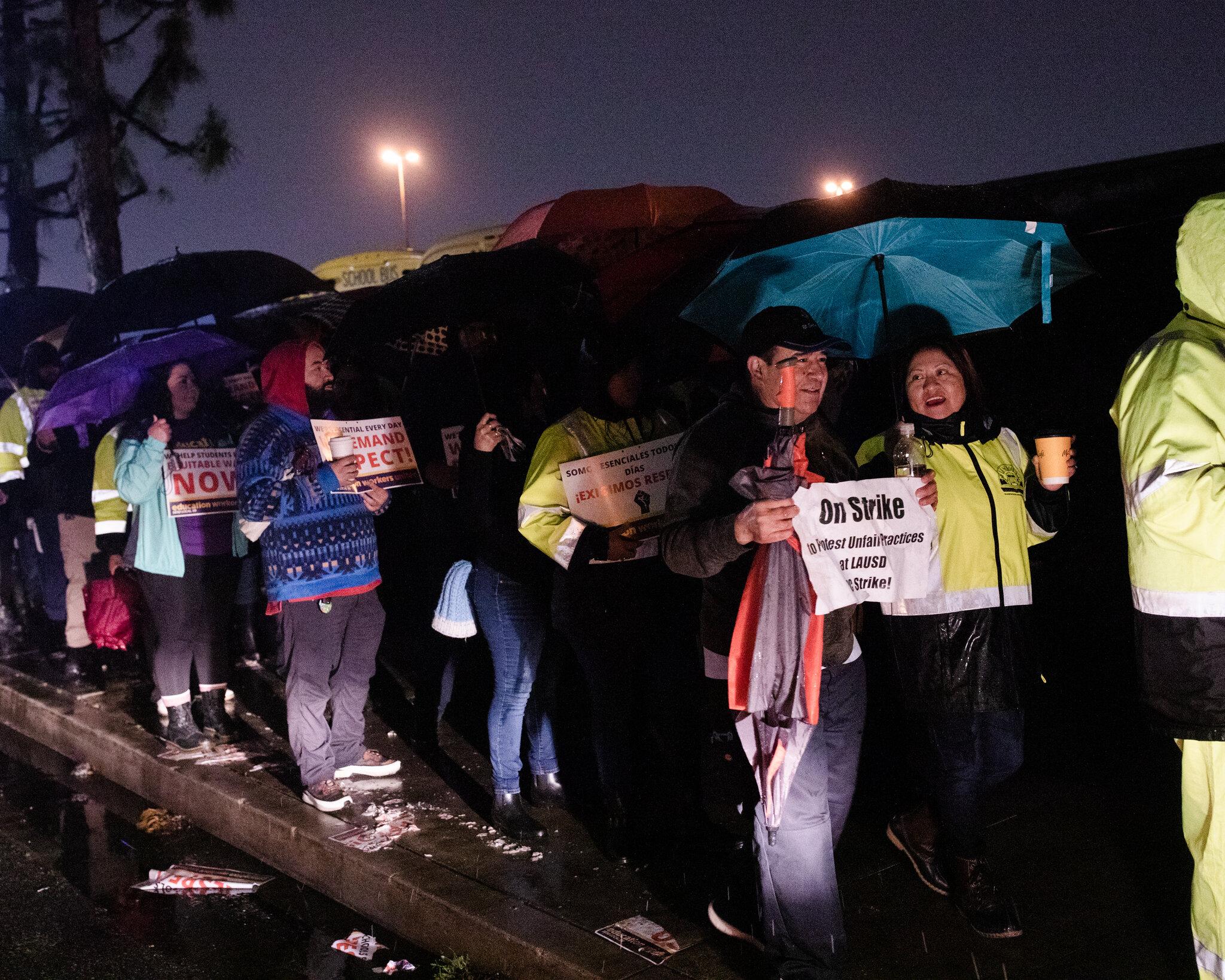
Escalation of L.A. Educators’ Strike: Advocating for Fair Compensation and Better Resources
The strike by educators and support personnel in Los Angeles has intensified, bringing to light persistent economic inequalities fueling the unrest. Teachers, aides, and other school staff have united in demanding not only salary increases that reflect the rising cost of living but also greater investment in critical classroom materials and support services. This labor action underscores a wider battle over how economic disparities influence public education, particularly in urban districts where overcrowded classrooms, outdated textbooks, and insufficient support staff are common challenges.
The union’s primary requests include:
- Considerable salary hikes to retain veteran educators amid escalating housing and living expenses
- Reduced student-to-teacher ratios to foster more effective instruction and personalized attention
- Expanded mental health programs to better support student emotional and psychological needs
- Increased funding for modern technology and essential classroom supplies
| Issue | Current Provision | Union Proposal |
|---|---|---|
| Annual Salary Increase | 3% | 7% |
| Average Class Size | 34 students | Maximum 28 students |
| Counselor-to-Student Ratio | 1:1,000 | 1:500 |
Economic Disparities Drive Dissatisfaction Among Educators and Communities
Economic inequality remains a significant factor shaping the frustrations expressed by teachers and families in Los Angeles. Educators emphasize that stagnant wages fail to keep pace with the soaring cost of living, especially in a city where housing prices have surged over 20% in the past two years alone. Meanwhile, families from economically disadvantaged neighborhoods point to chronic underfunding that results in fewer educational opportunities and resources for their children, perpetuating a cycle of inequity.
Highlighted concerns include:
- Growing class sizes predominantly in low-income areas
- Limited access to up-to-date digital learning tools
- Insufficient support for students with disabilities or special needs
- Neglected infrastructure and aging school facilities in marginalized communities
| Economic Factor | Effect on Education |
|---|---|
| Income Inequality | Uneven resource allocation across districts |
| Rising Living Costs | Decreased teacher retention due to financial strain |
| Funding Formulas | Disparities in school maintenance and upgrades |
Strike’s Ripple Effects on Students, Families, and Community Support Networks
The ongoing strike has disrupted daily routines for thousands of students, many of whom face interrupted instruction and limited access to essential services. Parents have voiced concerns over childcare challenges as schools remain closed or understaffed. Critical community programs linked to schools—such as subsidized meal plans and after-school enrichment activities—have been suspended, disproportionately affecting low-income families who rely heavily on these supports. Local nonprofits and community centers have stepped in to provide some relief, but the demand far exceeds available resources.
School administrators report a significant drop in student attendance, emphasizing that the strike’s consequences extend well beyond classroom learning. Below is an overview of how key services have been affected during the labor action:
| Service | Status During Strike | Consequences |
|---|---|---|
| Free Meal Programs | Paused at many locations | Heightened food insecurity among vulnerable students |
| After-School Tutoring | Canceled or postponed | Interrupted academic support |
| School Counseling | Reduced availability | Diminished mental health assistance |
Community advocates stress that while the strike aims to rectify systemic inequities faced by educators, its immediate fallout exposes the fragility of support systems that many students and families depend on.This situation highlights the intricate relationship between labor disputes and social welfare in one of the country’s largest urban school districts.
Strategies for Resolution: Boosting Funding and Implementing Systemic Policy Changes
The strike has brought urgent attention to the critical need for enhanced educational funding to support Los Angeles Unified School District’s schools, many of which are chronically underfunded. Experts warn that without substantial financial investment, challenges such as overcrowded classrooms, outdated learning materials, and deteriorating infrastructure will persist. The call for increased funding is especially pressing in economically disadvantaged neighborhoods,where resource scarcity is most acute.Stakeholders advocate for a budget overhaul that prioritizes frontline educators and addresses long-standing inequities in school financing.
Alongside financial demands, there is mounting support for thorough policy reforms designed to overhaul resource distribution and school governance. Proposed initiatives include:
- Establishing equitable salary frameworks to reduce teacher attrition
- Expanding access to counseling and special education services
- Enhancing community participation in school decision-making processes
- Ensuring openness in district expenditures and policy implementation
| Proposed Reform | Expected Outcome |
|---|---|
| Salary Equity | Improved retention of experienced educators |
| Expanded Support Services | Better student academic and emotional outcomes |
| Community Engagement | Greater accountability and responsiveness |
| Financial Transparency | Increased public confidence in district management |
These multifaceted solutions aim to address the root causes of educational inequity in Los Angeles, moving beyond immediate wage concerns to foster long-term systemic change.
Final Thoughts on the L.A. Educators’ Strike and the Quest for Educational Equity
As the Los Angeles school strike enters its second day, the underlying economic disparities that plague the city’s education system remain central to the conflict. Educators’ demands for fair compensation and improved working conditions amid soaring living expenses highlight broader challenges related to resource distribution and systemic inequality.The resolution of this standoff will not only impact the future of public education in Los Angeles but may also influence national conversations about equity and justice in American schools.